

Key takeaways
- Add compost and aerate for natural growth.
- Pick the right grass for your climate to save water and avoid extra fertilizers.
- Water deeply, mow taller, and skip chemical fertilizers for long-term lawn health.
Everyone wants a beautiful lawn where kids and pets can play safely, but many don’t realize that the chemicals they’re using might do more harm than good.
The good news? Eco-friendly lawn care is a simple, smarter way to get that lush, green yard without the fuss.
It’s safer for your family, better for the environment — and surprisingly easy.
Eco-friendly lawn care is all about letting nature do its thing.
It boosts soil health, strengthens grass roots, and cuts down on the need for chemicals.
With just a few simple tweaks, you can have a healthy, green lawn that sticks around for the long run.
In this blog, we’ll walk you through five simple tips to help you grow a healthy lawn without the need for harmful products.
Whether you’re just getting started or want to improve what you’ve got, these tips make eco-friendly lawn care a breeze.
Eco friendly lawn care tips for a lush lawn
Tip #1 — Start with healthy soil

Rich, nutrient-packed soil helps roots grow deep and keeps pests and diseases away naturally.
How to improve your soil naturally
- Add compost to bring in eco-friendly materials and helpful microorganisms.
- Aerate your lawn to loosen compacted soil, allowing air, water, and nutrients to reach roots.
- Mulch your grass clippings to naturally fertilize your lawn and retain moisture.
But remember, you can’t fix what you don’t know.
So if you’ve tried everything and nothing seems to work, it might be time to get down to the root cause (no pun intended) with a soil sampling service.
This way, you can pinpoint what your yard truly needs.
Tip #2 — Choose the right grass for your climate

Different climates need different types of grass. Picking one that fits your local weather makes eco-friendly care a lot easier.
Cool-season grasses (like Kentucky bluegrass or fescue) do well in cooler climates.
Warm-season grasses (like Bermuda or Zoysia) thrive in warmer temperatures.
For Frederick, you want grass that can handle both hot summers and cold winters. Here’s a quick guide:
- Kentucky Bluegrass
Perfect for cooler temps and gives you a lush, thick lawn. Just remember it loves a little extra water during dry spells. - Tall Fescue
It’s a solid choice because it handles heat and drought really well, making it perfect for Frederick’s mix of hot and cold weather. - Zoysia
If you’ve got sunny spots that see a lot of foot traffic, Zoysia is your go-to. It’s tough, handles heat, and is low-maintenance.
A mix of Tall Fescue and Kentucky Bluegrass is the ideal combo for an easy, healthy lawn.
Picking the right grass cuts down on water use and lowers the need for fertilizers and pest control.
When you choose grass that fits your region, your lawn stays healthier, greener, and more resistant to pests and drought.
It’s an easy way to save time and make organic lawn care more effective.
Tip #3 — Mow high for a healthier, happier lawn

Keeping your grass taller (about 3 inches) helps shade the soil, which retains moisture and prevents weeds.
How to mow for a healthier lawn
- Mow regularly but don’t cut too short. Taller grass develops deeper roots.
- Don’t cut your grass too short. It stresses the lawn and invites weeds to take over.
- Leave the clippings behind. They work as a natural fertilizer to keep your lawn healthy.
Mow it right, and your lawn will naturally fight off weeds and pests — no chemicals needed.
Tip #4 — Water smarter, not harder
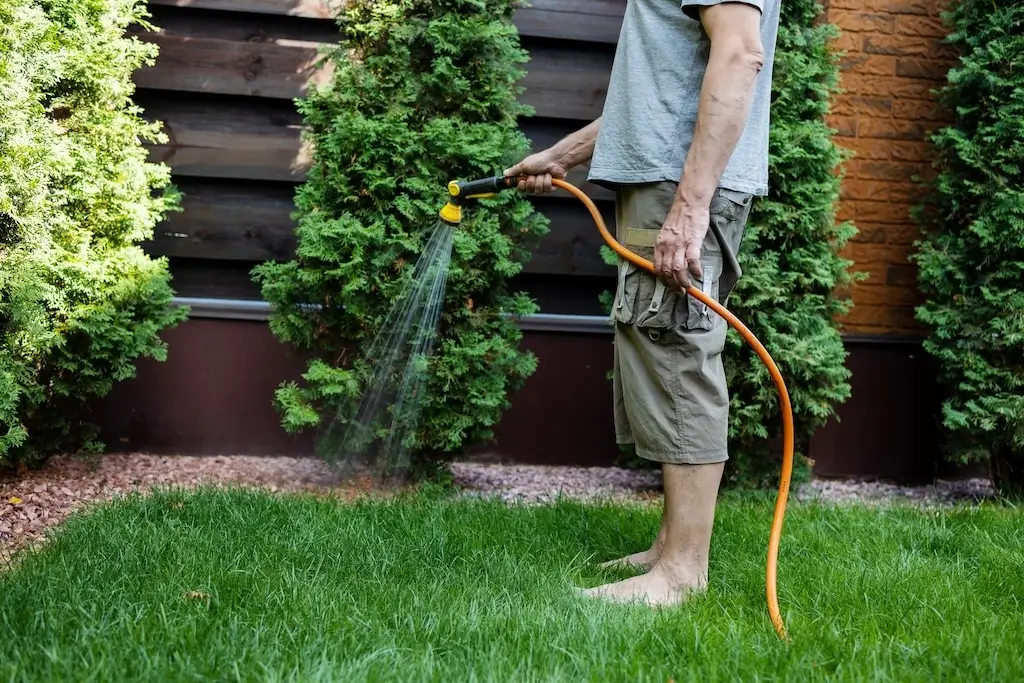
Most people overdo it with watering. The key is to go deep, not often.
Deep, infrequent watering builds stronger roots, making your lawn more resilient and drought-tolerant.
How to water your lawn the right way
- Water in the early morning to cut down on evaporation and make sure it soaks into the roots.
- Try to give your lawn about an inch of water a week—use a small container to measure it.
- Adjust watering during rainy periods to avoid overwatering.
Pro tip: Aerating your lawn is like giving it a little breathing room! It helps your grass soak up water and nutrients more effectively, so you waste less water and keep your lawn looking lush and drought-resistant.
With these natural watering practices and professional aeration services, you can keep your lawn healthy while using less water overall.
Tip #5 — Say goodbye to chemical fertilizers

Sure, chemical fertilizers can give you fast results, but they don’t do much for your lawn in the long run.
Eco-friendly options like compost and organic matter feed your lawn slowly, improving the soil and helping your grass grow deeper, stronger roots over time.
How to fertilize your lawn naturally
- Use compost to naturally boost your soil’s health over time.
- Add organic matter in the spring and fall when your grass is growing and ready to soak up nutrients.
- Keep an eye out for signs like yellowing or thinning grass, and tackle any issues with organic fixes.
Switching to eco-friendly fertilizers helps your lawn get stronger and more resilient over time.
You’ll break free from relying on chemical fertilizers and create a safer, healthier space for your family and pets.
An eco-friendly lawn care is absolutely worth it
Eco-friendly lawn care may take longer, but it’s a worthwhile investment.
You’ll end up with a lush, green lawn that’s safe for your kids, pets, and the environment.
A healthy lawn means fewer weeds, pests, and diseases — all with less effort over time.
And you don’t have to do it yourself.
In Frederick, you’ll definitely find a lawn care company that can take care of your lawn while keeping you and your loved ones safe from harmful chemicals.
In the end, eco-friendly lawn care is about making smart, sustainable choices that pay off for years to come.
It’s a win for your family, your yard, and the planet.