
Key takeaways
- Fertilize before winter to strengthen your lawn’s roots and make sure greens up faster in spring.
- Use mulch as a blanket to protect roots from freezing and add nutrients to keep your lawn strong.
- Clear leaves and tackle winter weeds to keep your lawn healthy, prevent mold, and stop weeds from taking over.
Winter can be rough on lawns — but you don’t have to watch your grass turn brown and die every year.
With a good plan, you can keep it healthy and ready for spring.
From fertilizing before winter to professional weed control, these simple steps will help you avoid lawn disasters and maintain healthy grass year-round.
How to take care of your lawn in winter
Step 1 — Fertilize before the first frost

Before winter, it’s important to give your lawn the nutrients it needs.
Fertilizing in the fall helps strengthen the root system. This way, the grass can survive the cold and bounce back quickly in the spring.
The right fertilizer keeps feeding your lawn slowly, even through the colder months.
Why fertilize in the fall?
- Helps the lawn store food to get through winter
- Makes the grass handle frost and cold better
- Gets your lawn ready to turn green faster in the spring
A little prep now saves you a lot of hassle later.
Take the time this fall, and your lawn will thank you when spring rolls around, greener and healthier than ever.
Step 2 — Clear leaves and debris to let your lawn breathe
As fall rolls in, so do the leaves.
Sure, they look nice at first — but if you leave them piled up, your grass is going to suffer.
Clearing leaves and other debris off your lawn before winter hits is a simple way to keep things healthy.
Why clearing leaves helps:
- Stops gross mold and fungus from setting up camp.
- Keeps pests from making a home in leaf piles.
- Makes sure your grass gets sunlight and stays strong.
No one likes a soggy, moldy mess.
A little raking goes a long way. It keeps your lawn looking good and helps avoid a headache when spring comes around.
Step 3 — Keep your lawn hydrated (but not soaked)
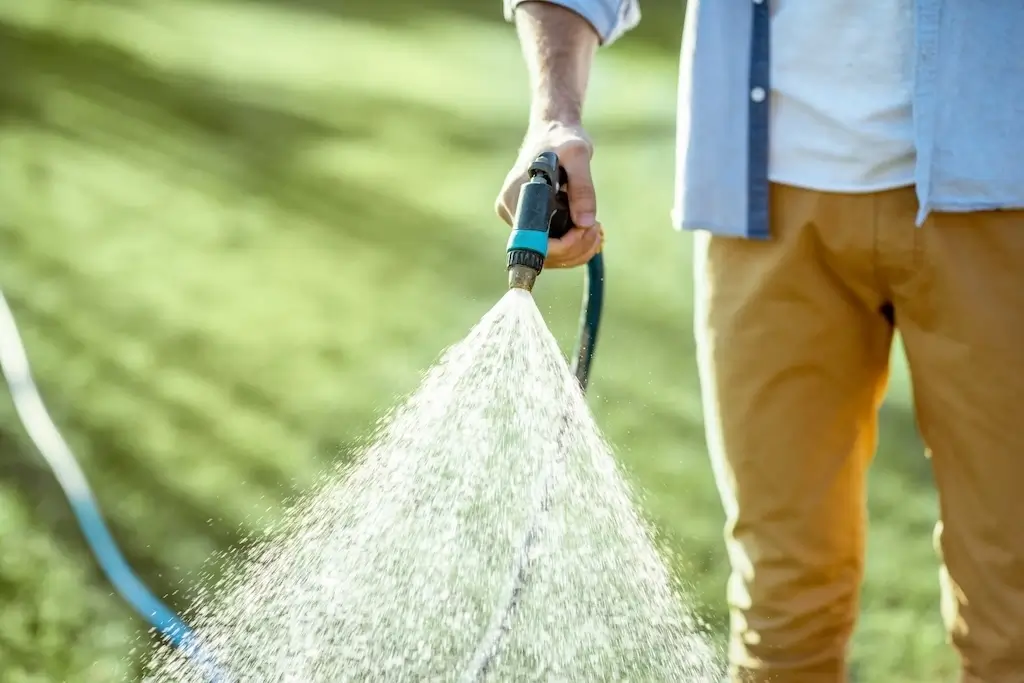
Watering is a big part of lawn care, but it gets tricky in winter.
While you don’t want to overwater your grass, you also don’t want it to dry out completely.
How to water correctly before and during winter
- Water lightly but consistently during the early winter.
- Focus on getting the right moisture levels in the fall.
- Skip watering during freezing temps to avoid damaging the roots.
Adjusting your watering schedule to match local conditions helps keep your grass hydrated without overdoing it.
Step 4 — Shield your lawn from winter’s chill

Compost or mulch acts as a blanket for your lawn during winter. It insulates the soil and protects roots from freezing temperatures.
Mulch also helps the soil hold moisture, stops erosion, and adds nutrients as it breaks down. This extra layer keeps your lawn healthier and stronger during the colder months.
Plus, as organic mulch breaks down, it gives your grass a little nutrient boost.
For better results, go with organic materials that boost soil health without harsh chemicals.
The right mulch, applied properly, helps protect your lawn from winter’s chill.
Step 5 — Rely on professional winter weed control
Many homeowners assume that weeds only grow during the warmer months.
But in reality, weeds can take root during winter and come back even stronger in the spring.
Act now so you can prevent an infestation before it starts.
Why winter weed control is effective
- Keeps weeds from popping up when spring rolls around
- Makes sure your grass gets all the food and water it needs
- Helps your lawn stay healthier and bounce back better over time
In Frederick, there are eco-friendly weed control services that stop weeds from taking over your lawn.
Their year-round weed control service helps make sure that your grass stays healthy and strong, without the use of harsh chemicals.
Bonus tip — sign up for a year-round lawn care program
Winter lawn care can be tricky.
Grass goes dormant, but that doesn’t mean you can ignore it. Snow, ice, and freezing temperatures can cause long-term damage if your lawn isn’t properly prepared.
By signing up for a year-round lawn care program, you leave the seasonal work to professionals who know exactly what your lawn needs.
They’ll handle tasks like aerating the soil, applying winter fertilizers, and preventing snow mold or frost damage.
It’s a simple way to protect your lawn’s health through winter, without having to worry about maintenance yourself.
Winter’s coming, but your lawn’s ready
Winter often stresses grass with cold, dry air and soil compaction. But a few proactive steps can help.
Start with fertilizing in the fall to give roots the nutrients they need to survive. Aeration is key too, allowing air, water, and nutrients to reach deep into the soil. And don’t ignore those lingering weeds—they compete with your grass for space and resources, even when it’s cold.
Even if you’re unsure about the specifics, taking any of these steps will strengthen your lawn. And if it feels overwhelming, reach out to a trusted local lawn care company. They can make sure your grass gets what it needs before the frost hits, so you’re set for a healthy spring.
