
Key takeaways
- The risks of tree trimming include falling branches, electrocution, and killing your tree by cutting too much.
- Hidden dangers like rotting wood can make branches snap unexpectedly, causing injuries or property damage.
- Trimming trees near power lines or protected species without permission can lead to hefty fines or legal trouble.
Tree trimming seems easy, but a single mistake can lead to injuries, property damage, or expensive legal trouble.
Some risks are obvious — like falling branches — but others can sneak up on you, like hidden rot inside limbs or cutting too much and killing the tree.
Whether you’ll tackle it yourself or hire someone, know these dangers upfront and save a lot of money and stress.
7 risks you need to know before picking up a saw or calling in a pro
#1 — Cutting too much can kill your tree
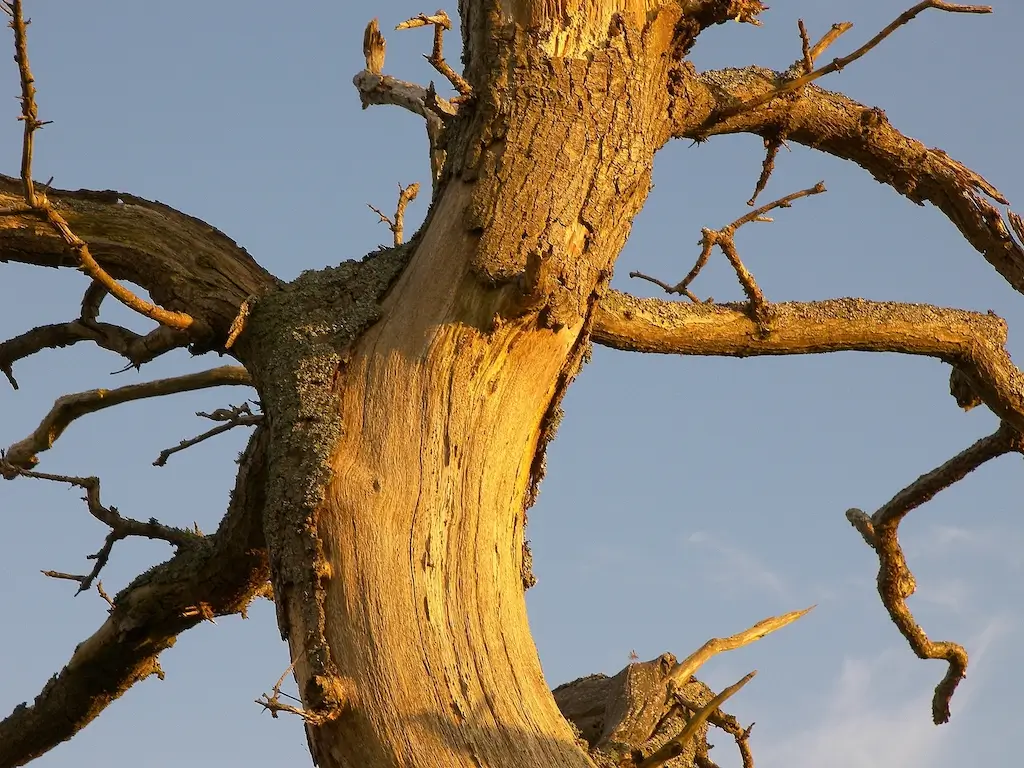
Trees need their leaves to make food. When you remove too many branches, they lose energy and struggle to grow.
Over-trimming weakens the tree and makes it easier for pests and diseases to take over. Some trees never recover after a bad trim job.
A stressed tree might drop more branches than usual or start rotting from the inside. In some cases, it simply dies. Then, instead of saving money by trimming it, you’re stuck paying for removal — which isn’t cheap.
If you’re unsure how much is safe to cut, don’t guess. Talk to an arborist. They can tell you exactly how much to remove without damaging the tree.
An arborist is a professional trained in the care and maintenance of trees. They know how to safely prune, remove, or treat trees without harming them or the surrounding environment.
As a general rule, never cut more than 25% of a tree’s canopy at once. Anything beyond that puts the tree at serious risk.
#2 — Falling branches can cause serious property damage
A branch doesn’t have to be big to do damage. Even small ones can crack windows, dent cars, or destroy fences.
Large branches are worse. A heavy limb crashing onto your roof can break shingles, punch holes, or even collapse parts of the structure. If it falls on someone, you’ve got a whole different problem.
If a trimmed branch lands on your neighbour’s property, you could be responsible for repairs. That means paying out of pocket unless your insurance covers it — and not all policies do.
Always use controlled cuts with ropes to guide branches down safely. Never let them fall freely unless there’s nothing below.
If you’re working near structures, vehicles, or people, think twice before attempting it yourself. The repair costs alone could be higher than hiring a professional in the first place.
# 3 — Power lines make things extremely dangerous
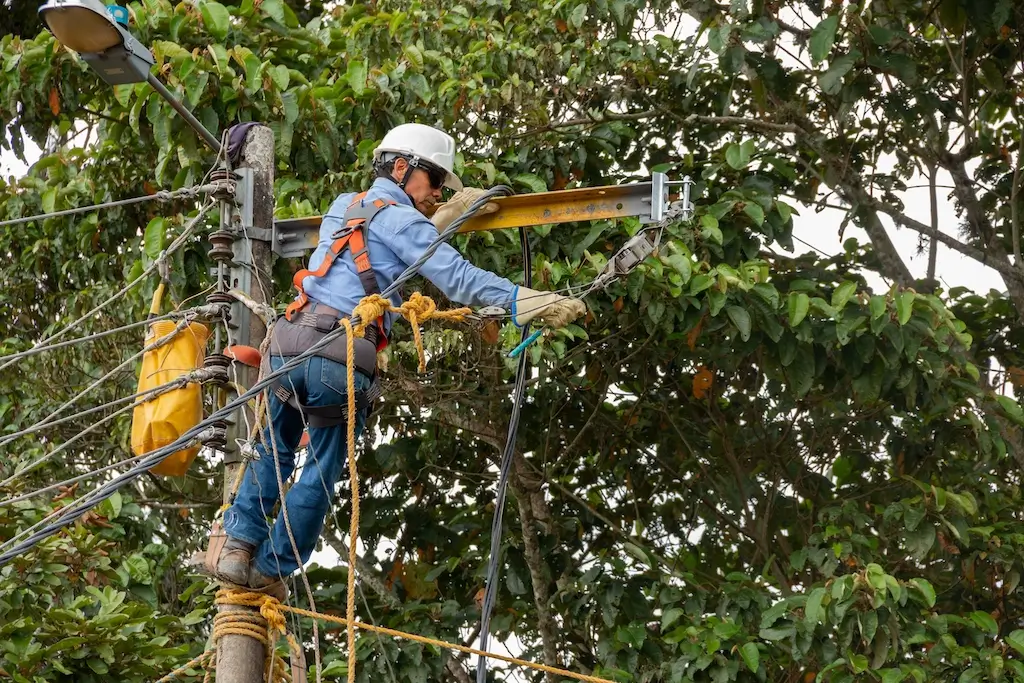
Electricity can jump. You don’t have to touch a power line for it to hit you. If you get too close while trimming, you could be electrocuted instantly.
Even if you don’t touch the wires directly, cutting a branch that’s leaning against a live wire is just as risky. Wood can conduct electricity, and so can damp tools or ladders.
In most places, it’s illegal to trim trees near power lines unless you’re a licensed professional. If you ignore this rule and something goes wrong, you could face hefty fines—or worse.
If your tree is anywhere near power lines, call your local utility company before doing anything. They may trim it for free or tell you who’s legally allowed to handle it.
This isn’t one of those “try it and see” situations. The risk here isn’t just property damage — it’s your life.
#4 — Ladders are more dangerous than they seem
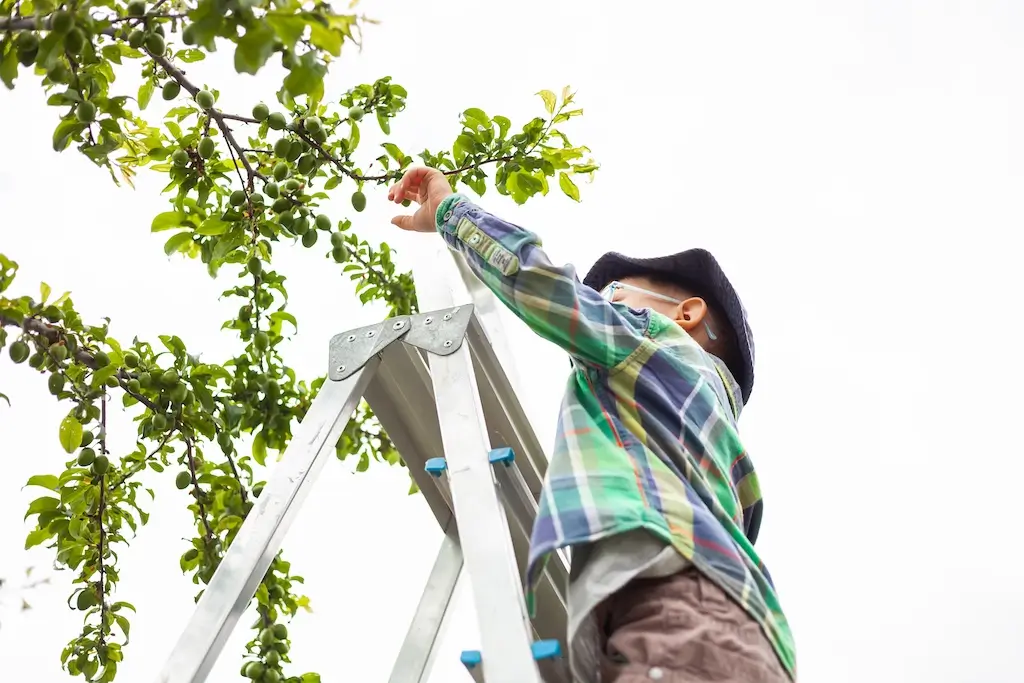
Ladders seem simple, but they’re involved in thousands of accidents every year. Add sharp tools and unstable ground, and the danger multiplies.
One slip and you’re falling several feet onto hard ground. Best case? Bruises and scratches. Worst case? Broken bones or a trip to the hospital.
Reaching too far is a common mistake. If you’re stretching beyond the ladder’s base, you’re asking for trouble. It only takes a slight shift to throw off your balance.
Wind makes things even worse. A sudden gust can knock you sideways mid-cut, sending you straight to the ground.
If you must use a ladder, secure it properly. Better yet, use a harness tied to a sturdy anchor point. And if you’re feeling wobbly, stop. No tree branch is worth breaking your neck over.
#5 — Hidden rot inside branches makes them unpredictable
A branch can look solid from the outside but be completely hollow inside. You won’t know until it snaps unexpectedly.
Internal decay weakens wood over time, making it dangerous to climb or cut. The last thing you want is a branch breaking under you mid-cut.
Deadwood is especially unpredictable. Unlike healthy branches, it doesn’t bend — it just breaks. If you’re standing underneath when it goes, you’re in the direct line of fire.
Before cutting anything large overhead, do a tap test. Hit the branch with a tool and listen. Hollow sounds mean internal rot, which means extra caution.
If you’re dealing with major deadwood, consider hiring a professional. Trying to remove it yourself could go wrong fast.
#6 — Improper cuts lead to expensive long-term problems
Bad pruning techniques don’t just look ugly — they cause long-term damage.
Flush cuts (trimming too close to the trunk) strip away protective layers, exposing the tree to infection and disease. Once rot sets in, it spreads fast.
Cutting at the wrong angle leads to water pooling in the wound. Over time, this accelerates decay, weakening the branch attachment points. Eventually, the tree becomes structurally unsound.
Topping — removing large sections of the canopy — is another disaster. It forces the tree to produce weak, unstable regrowth, making future breaks more likely.
Fixing these mistakes costs money. You might end up needing pesticides, fertilisers, or professional intervention to keep the tree alive. If the damage is too severe, removal might be your only option.
Follow proper pruning methods. If you don’t know them, learn—or hire someone who does. Bad cuts today mean bigger bills tomorrow.
# 7 — You might break local laws without realising it
Not all trees are fair game for trimming. Many cities have strict rules about cutting or removing certain species, especially older or protected ones. Breaking these rules can mean hefty fines.
Homeowners’ associations (HOAs) often have their own landscaping rules. Trim the wrong tree without approval, and you could get slapped with penalties or even legal action.
If the tree sits on a boundary between properties, things get even trickier. Trimming it incorrectly could spark disputes with neighbours — sometimes leading to lawsuits.
Before cutting anything, check local regulations. A quick phone call to your council or HOA could save you a lot of hassle later.
The last thing you want is to pay thousands in fines because you didn’t read the rules.
Trim smart or pay the price
Tree trimming isn’t as simple as grabbing a saw and going for it.
One wrong move can cost you thousands in damages, medical bills, or legal fees. Between hidden rot, falling branches, and power lines, the risks are real.
But if any of this sounds risky — or like more work than you expected — call in a professional. Someone with experience can trim safely and keep your trees healthy.
Know the risks, plan ahead, and trim wisely. Your wallet (and your safety) will thank you.