
Key takeaways
- Boxwood, yew, and privet are the top answers to “what kind of shrubs can you shape” because they grow dense, trim clean, and hold their form.
- Some shrubs, like rosemary or lavender, let you get playful with spirals or mounds but still stay low-maintenance if clipped right.
- Slow growers need trimming just twice a year, while fast ones like privet might need a haircut every few weeks.
If you want your garden to look clean, sharp, and a little fancy without hiring someone, shrub shaping is the way to go.
Not every shrub can handle it. Some fall apart after one trim, while others just grow like wild hair.
These shrubs, though, actually take well to shaping. They stay compact, respond well to clippers, and won’t fall behind if you miss a week.
Whether you’re going for hedges, spirals, or simple rounded forms, these picks make it easier to keep things looking polished without a lot of work.
What kind of shrubs can you shape?
1. Boxwood is the easiest shrub to shape for a beginner
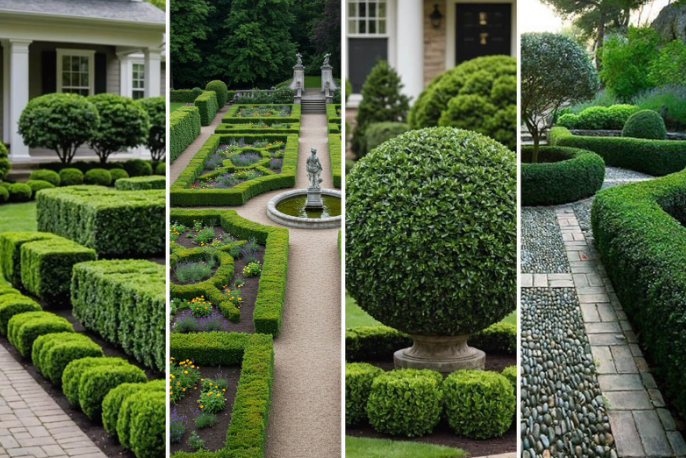
Almost everyone starts with boxwood. It grows slowly, stays full, and holds its shape without much effort.
If you’ve never shaped a shrub before, this one makes it easier to get it right.
It’s an evergreen shrub, so it stays green all year. You won’t get dead patches or bare spots when the weather turns cold.
The leaves are also small and packed in close, which helps your cuts look clean and even.
You can shape it into balls, cones, short walls, or whatever else you’re up for. It’s a standout along paths, driveways, or around garden beds.
And if you want to try your hand at topiary, this is where you start.
It doesn’t ask for much. Trim it in late winter or early spring. Summer and winter pruning each have different effects, so stick to the seasons that support new growth.
Skip the shears during heatwaves or frosty days. Give it steady water, but don’t overdo it.
As long as it gets a bit of sunlight and decent soil, it’ll stay in line.
2. Yew gives bold shapes with less effort
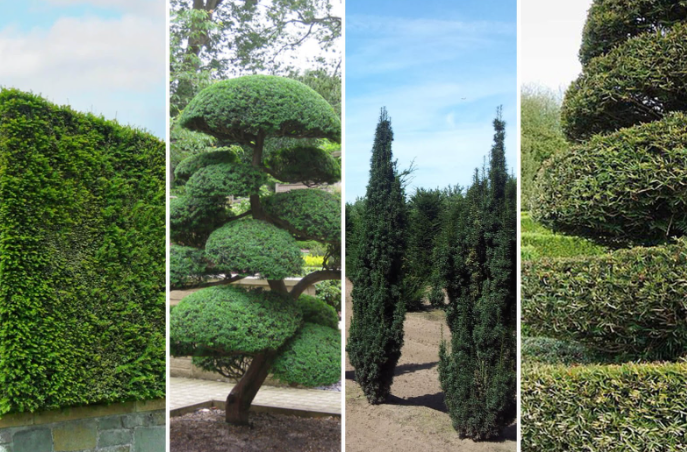
Yew is for people who want structure without a lot of trimming. It grows upright and thick, which makes it ideal for tall hedges, wide columns, or strong, clean lines.
It doesn’t grow fast, which is a good thing. Once you shape it, it stays put.
You won’t be out there reshaping every couple of weeks. That saves time and keeps things simple.
It stays green through winter, handles cold well, and can take a heavy trim if needed. If you make a mistake, it usually fills back in.
Trim once in late spring and again in early fall. No need to keep clipping it. Twice a year does the job. If you work with professional lawn care services, they’ll know the timing.
Just don’t overdo it, because a yew doesn’t like being smothered.
Give it space to breathe. Don’t plant them too close together. They need airflow to stay healthy.
3. Privet grows fast but demands more trimming
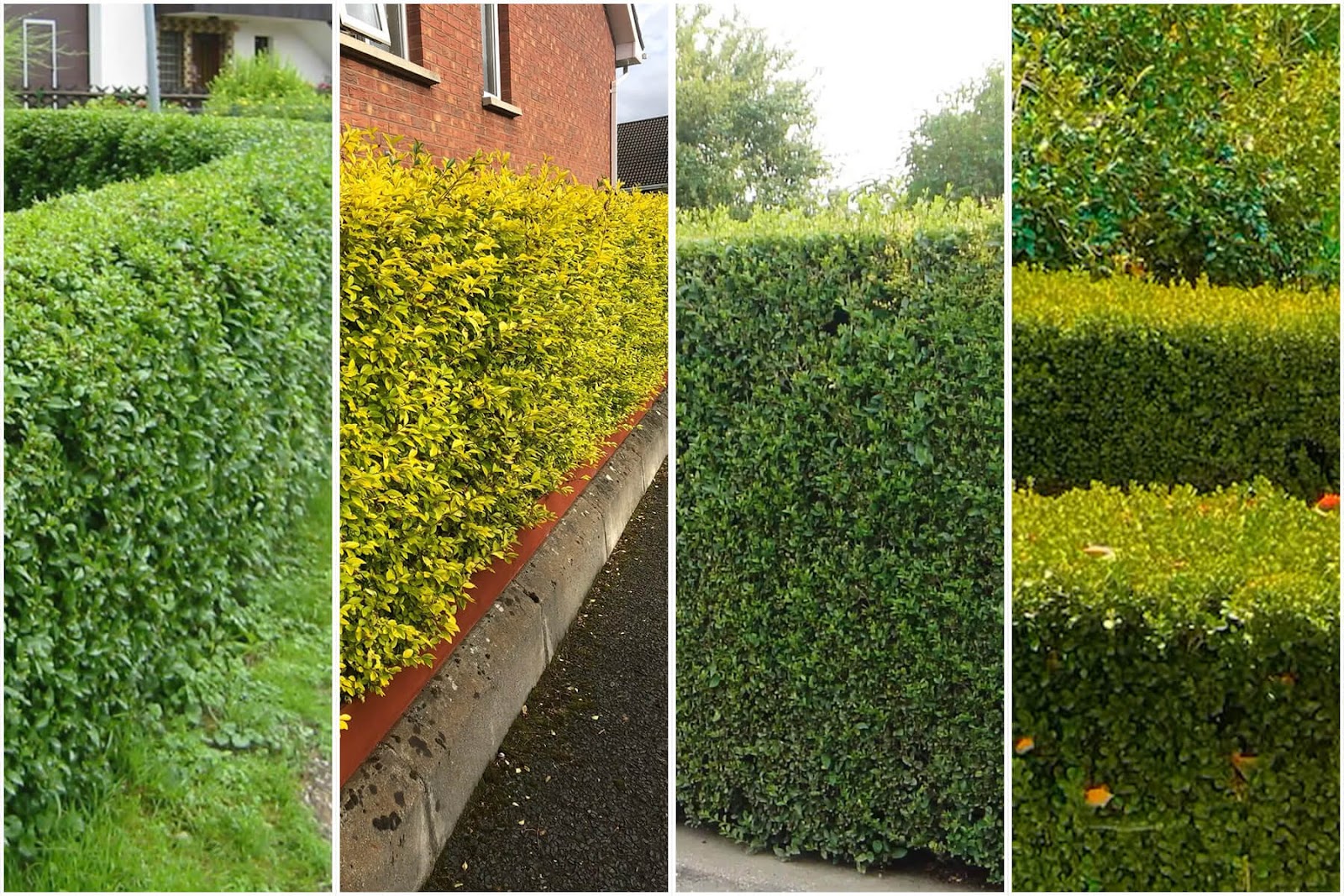
Privet grows fast. You’ll see new shoots within weeks, which is rare for shrubs that shape well.
But that speed means you have to keep it in check.
If you miss a trim, it goes from tidy to messy in no time. Stay consistent, though, and it gives you dense growth and sharp lines.
It’s a solid pick for hedge walls, arches, or curved paths. The small leaves help you get a clean edge without bald patches.
Plan on trimming it every two to three weeks when it’s growing fast. It’s more work than some others, but the payoff is quick results.
Keep it watered during hot months.
In spring, feed it with compost or a basic fertilizer to keep it growing strong. It also handles city air pretty well, which makes it a smart pick for urban yards.
4. Japanese holly is the heat-proof version of boxwood

Japanese holly looks a lot like boxwood, but it handles heat better. The leaves are small, glossy, and deep green.
Once trimmed, it keeps its shape without needing much follow-up.
You can use it just like boxwood for borders, low hedges, or neat round mounds. It also fits well in formal gardens where you want even shapes on both sides.
The best part is how little it asks for. Trim it once in spring and again at the end of summer. That’s usually enough to keep it looking tight.
It shrugs off pests and common diseases better than many hollies. If your summers get rough or your winters stay soft, this holds up.
Plant it in full sun or partial shade. The soil should be slightly acidic and drain well. Don’t let it sit in water. That’s when it starts to struggle.
A little help from weed control services can also keep the area around it clean without much fuss.
5. Dwarf Alberta spruce gives structure with zero chaos

This one naturally grows into a cone. Even without trimming, it stays neat. That’s not something most shrubs can say.
It’s great for adding vertical shape near walkways, patios, or front steps. And because it grows slowly, you won’t have to chase down wild branches every few weeks.
A light trim once a year in early spring is all it needs. Just clip any uneven spots. Too much pruning stresses it out, so go easy.
It handles cold like a champ but doesn’t like heat and humidity. If you live somewhere hot and sticky, skip this one. If not, give it full sun and deep water during dry spells.
Mulch helps keep moisture in. You can skip fertilizer unless you signed up for a soil sampling service and results show that you need it.
6. Euonymus adds color while staying clean

Euonymus does more than just hold a shape. It brings in color. Varieties like ‘Emerald Gaiety’ give you green and yellow leaves that stay bright, even after a trim.
It works well for low hedges or soft mounds along borders. It keeps its form without much effort, and you can shape it tight or let it stay a bit loose if that’s more your style.
One light trim a year is enough to keep it in good shape. If you want a sharper line, give it another cut in midsummer.
Keep an eye out for scale insects. They’re common on shrubs like this, but tree and shrub care services can help manage them before they become a problem.
It grows fine in full sun or part shade. Average soil is all it needs, and it doesn’t fuss if conditions aren’t perfect.
7. Lavender gives soft shape and fragrance

Lavender doesn’t get enough credit as a shapable plant. It naturally forms soft, round mounds that look clean without much effort. This makes this shrub perfect for sunny beds or along paths.
You also get the bonus of scent and blooms. But it needs the right cut, or it turns woody and thin.
After it flowers, trim back about a third. Don’t cut into old wood, because those parts don’t regrow. Light pruning helps it stay full and healthy the next year.
It likes full sun and dry soil. Wet roots cause problems, so raised beds or rocky spots work best. Add gravel or sand if your soil holds too much water.
You might also want to skip the fertilizer. Lavender prefers lean soil, and too much feed just makes it floppy.
In some cases, lime application services can help balance the pH, especially if your soil leans too acidic.
8. Rosemary is great for creative shapes (and smells amazing)
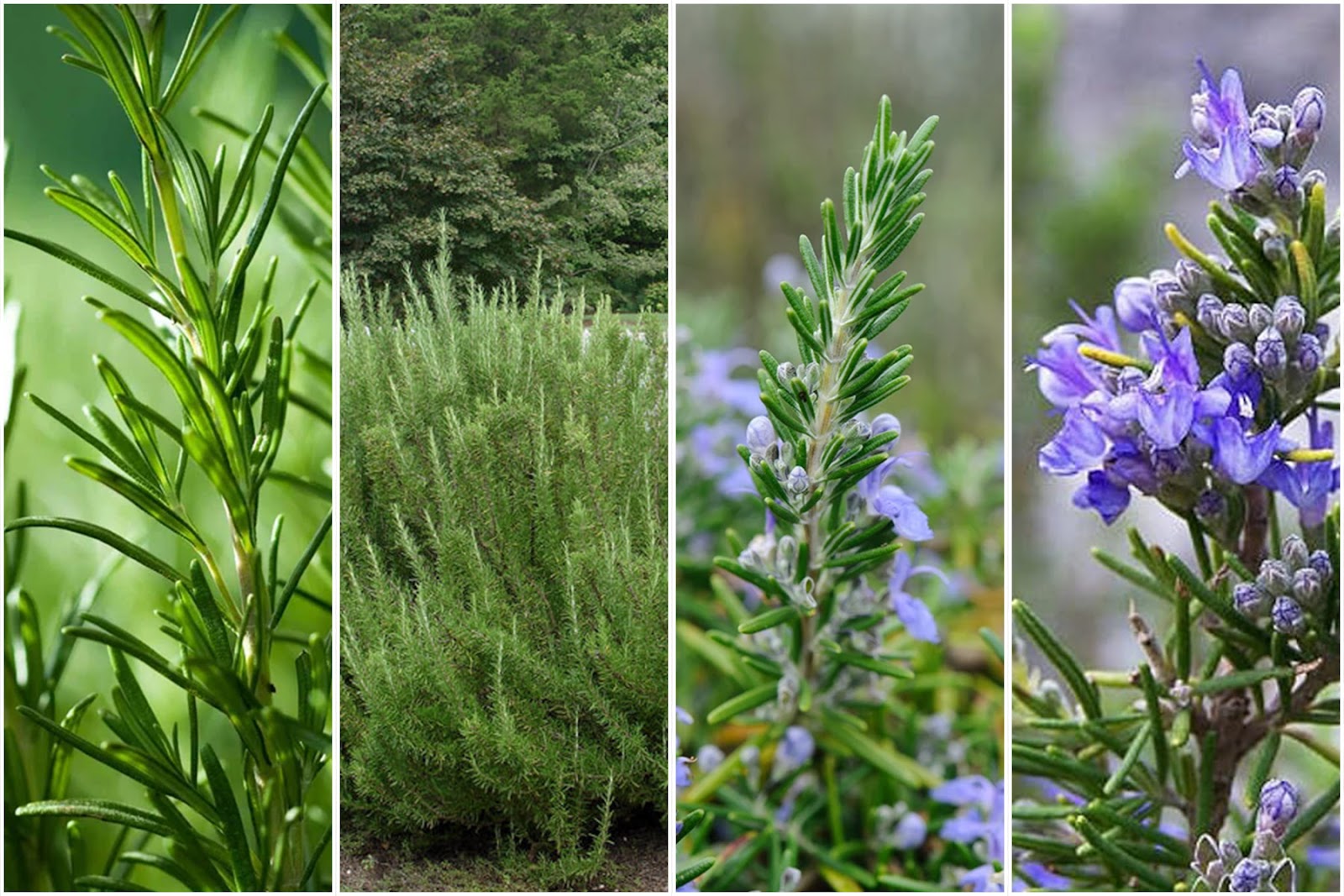
Rosemary isn’t just for the kitchen. It’s a tough evergreen herb that takes well to shaping.
You can trim it into low hedges, rounded forms, or even spirals if you’ve got the patience. It can handle heavy cuts and grows back with no trouble.
If you want something that smells good and holds a creative shape, rosemary is a solid pick.
In colder areas, keep it in pots and move it indoors for winter. Outside, it needs full sun and dry, well-drained soil.
Don’t overwater. Too much moisture is what kills it.
Trim whenever it looks unruly. More during warm months, less in winter.
As long as you don’t drown or freeze it, rosemary will keep going.
9. Myrtle is small but surprisingly shapable

Myrtle doesn’t get much attention, but it should. Its fine leaves take well to shaping, which makes it great for small hedges, pots, or filling in tight spots on patios.
It doesn’t scream for attention, but with regular trimming, it stays neat and clean. It’s a smart choice where larger shrubs would feel out of place.
It likes steady watering and doesn’t do well if the soil dries out too often. In warm months, give it a trim every six to eight weeks to keep the shape looking sharp.
Watch for root rot in soil that drains poorly. Outside of that, it’s easy to work with and stays in line.
Keep your shrubs in shape the right way
Before you head to the nursery or pick up your shears, there are a few things to keep in mind.
If you want clean hedge walls, go with yew or privet. They grow tall and tight, and they’re easy to trim into straight lines.
For rounded shapes along garden edges, boxwood or lavender are solid picks. They form natural mounds and stay looking polished with just a little care.
If you’re itching to try spirals or playful shapes, rosemary is a good fit. It holds form and smells great. For a ready-made cone, go with dwarf Alberta spruce, because it basically shapes itself.
When planting, leave space between each shrub. They’ll spread out over time. Check how much sun each one needs.
Don’t force shade-loving shrubs into full sun, because they won’t grow well and will start to struggle. Start with younger plants. Mature ones are tougher to reshape and more likely to resist changes.
Also, remember that healthy soil makes shaping easier. When roots are fed well, shrubs bounce back faster and grow more evenly.
A slow-release treatment helps keep that balance without overdoing it.
If your shrubs are already overgrown or misshapen, a proper first cut matters. Trimming and pruning can clean up the starting point so your shaping work isn’t built on a mess.
If you are not sure where to start or you are dealing with tricky soil or sun conditions, talking to a local lawn care company can help you figure out what works and what’s worth the effort. They will help you choose plants that actually work for your space and make sure you’re not stuck with something that’s hard to manage from the start.
Once you’ve picked the right plants, most of the work is done. From there, it’s trimming now and then, watering right, and letting the plants settle in.