
Key takeaways
- Protecting tree trunks in winter stops cracking. It helps keep trees strong and cut down the risk of disease.
- Insulating roots keeps them warmer and healthier, giving trees a better shot at growing when spring rolls around.
- Simple winter tree care — like watering and managing snow buildup — helps trees stay resilient. It helps avoid stress that could lead to long-term damage.
Winter can be tough on trees. Frost, heavy snow, and hungry critters can put even the healthiest ones at risk.
Thankfully, keeping your trees safe doesn’t require fancy tools or complicated techniques.
With a few straightforward steps, you can help your trees handle whatever winter throws their way.
Here are 5 simple, effective tips to give them the best shot through the cold months.
How to protect trees in winter
1 — Wrap tree trunks to prevent cracking
Start by wrapping the trunks, especially if your trees are young or have thin bark.
Cold snaps can do a number on bark, especially when it warms up during the day and then freezes at night.
Wrapping helps keep things steady and protects against cracking.
Burlap or tree wrap works great — just skip plastic since it traps moisture.
Wrap from the bottom up to about three feet, snug but not too tight.
Then, when spring arrives, take the wrap off to let the trunk breathe as temperatures rise.
2 — Mulch to insulate roots
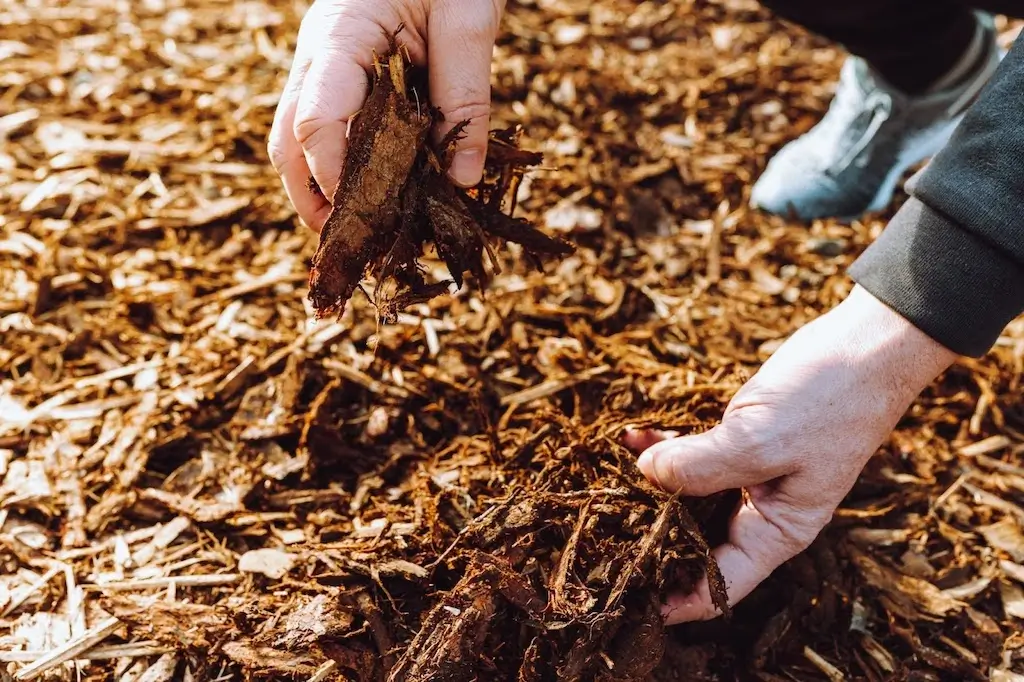
Mulching is a simple way to keep roots warm and cozy through winter.
Just spread a two to four inch layer of mulch around the base of your trees.
Wood chips, straw, or even fallen leaves work well.
Just remember to keep the mulch about two inches away from the trunk. Piling it right up against the bark can trap moisture, leading to rot or attracting pests.
For best results, mulch in late fall before the ground freezes.
This will lock in moisture and give roots extra insulation against those deep winter chills.
3 — Water strategically in winter
It might seem odd, but trees still need a bit of water in winter.
In late fall, give them a deep drink, especially if it’s been a dry season.
If you get a mild winter day and the ground isn’t frozen, you can add a bit more water then too.
But once the soil freezes, hold off — roots can’t absorb water from frozen ground.
Evergreens especially appreciate winter watering, as they lose moisture through their needles all season long.
4 — Trim branches and remove heavy snow
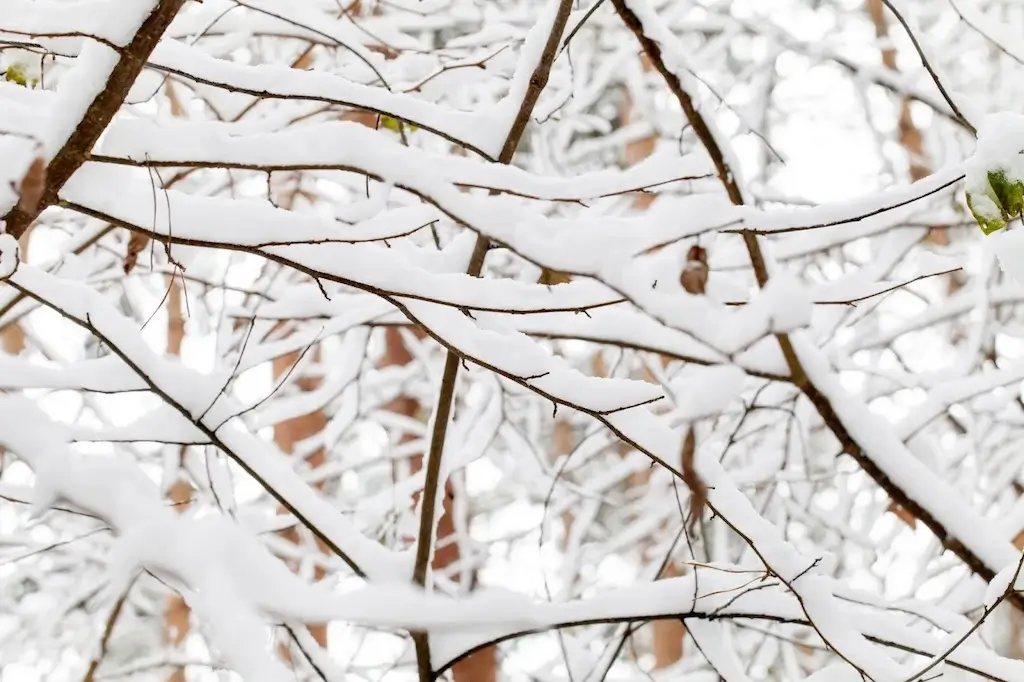
Heavy snow can be tough on branches, weighing them down until they bend or even snap.
To help your trees handle it, get the help of tree and shrub care professionals and trim back any weak or extra-long branches.
This’ll make the biggest difference once the snow hits.
When it snows heavily, take a few minutes to check on your trees.
Gently shake the lower branches to knock off the heaviest buildup.
For higher branches, a soft broom or pole works great to brush off snow without risking any damage.
Just go easy — branches can get brittle in the cold. A light touch is all you need.
This quick bit of care can really help keep your trees strong over the winter.
5 — Protect trees from animals

Winter can bring out hungry animals, and deer or rabbits will often nibble on tree bark when food is scarce.
To keep them away, try putting some plastic or wire guards around the trunks of younger trees.
You can also spray a bit of animal repellent. Just make sure it’s safe for plants and remember to reapply it after snow or rain.
If you have any fallen fruit or nuts around, clear those out to avoid giving animals an extra reason to visit your trees.
Help your trees thrive through winter and beyond
With these simple steps, you’re giving your trees the best shot at making it through winter’s toughest conditions.
A bit of prep now will keep them strong, protect your investment, and set the stage for a beautiful yard come spring.
Each of these tips is easy enough to tackle yourself, from wrapping trunks to mulching and giving branches a little help after a snowfall.
But if winter weather starts feeling overwhelming, there’s no harm in reaching out for a bit of extra help from professionals.
Don’t forget, even little steps go a long way. Just checking on your trees after big storms or brushing off heavy snow can make a real difference.