
Key takeaways
- Getting rid of ants in your lawn means killing the nests at their source without wrecking your grass or putting pets at risk.
- Natural fixes like dish soap spray, boiling water, and food-grade diatomaceous earth can work fast if you hit active mounds early in the day.
- Lawn-safe baits and granules take longer but kill whole colonies. But, don’t mow or water right after using them.
Ants are one of the common lawn pests that are annoying to deal with.
They dig tunnels, build mounds, and sometimes even bite.
Worse, they can damage the grass over time.
But getting rid of ants in your lawn is not as simple as spraying them down and hoping for the best.
Most ant killers use chemicals that wreck your lawn or put pets at risk.
The good news is, you don’t have to choose between dead ants and dead grass.
There are safe ways to control ants without harming your yard or the animals that play in it.
Here’s how to handle it without turning your lawn into a science experiment.
How to get rid of ants in your lawn — 7 best care tips
Tip #1 — Find out where the ants are hiding

Before you treat anything, figure out exactly where the ants are nesting.
Look for small piles of loose dirt scattered around your yard.
These are ant hills, and they usually sit right above the colony.
You’ll often find them near sidewalks, patios, garden beds, or under stones.
Another trick is to follow the ants themselves.
Watch where they move in and out of the ground.
Their trails can lead you straight to the heart of the problem.
Targeting their main base is the only way to stop the colony from spreading.
Tip #2 — Use natural methods first if you’ve got pets or kids running around
When you’ve got pets or kids playing in the yard, natural ant control is the safest first step.
Here are some easy ways to try:
Diatomaceous earth
Diatomaceous earth is one of the best options. It’s a powder made from crushed fossils.
To people and pets, it feels like dust. But to ants, it’s deadly.
It works by cutting their bodies and drying them out.
Here’s a quick tip:
- Buy food-grade diatomaceous earth from garden stores.
- Sprinkle a thin line around anthills and along ant trails.
- Keep the area dry because moisture makes it less effective.
Vinegar spray
Vinegar sprays can also help break up scent trails.
It confuses worker ants so they lose their way.
Do this:
- Mix equal parts white vinegar and water in a spray bottle.
- Spray directly on ants and around their entry points.
- Repeat daily until ants stop returning.
Boiling water
Pouring boiling water into ant hills is another method.
But it only works if the colony is shallow.
Here are simple steps:
- Boil a kettle of water.
- Pour slowly over the ant mound.
- Be careful not to splash nearby grass or plants.
Spray dish soap
Dish soap is another simple and safe way to kill ants on contact.
This method works best for small infestations or spot treatments.
It breaks down the protective coating on their bodies.
Once that coating is gone, ants dry out and die within minutes.
It’s easy to make and even easier to use.
Here’s what to do:
- Mix 1 tablespoon of liquid dish soap with 2 cups of water in a spray bottle.
- Shake well to combine.
- Spray directly on visible ants to kill them instantly.
- For ant hills, soak the top of the mound to hit as many ants as possible.
- Use this method during dry weather so the solution doesn’t wash away too quickly.
All of these natural methods are easy to apply and safe for most lawns when used properly.
But remember, these options work best when the ant problem is still small.
For larger colonies, you’ll probably need stronger products.
Tip #3 — When home remedies aren’t cutting it, go for outdoor-safe products
Sometimes natural remedies aren’t enough, especially if the colony is large or has spread across your lawn.
In that case, pick products designed for outdoor use.
Ant baits are a smart choice because they work slowly but deeply.
Ants pick up the bait and carry it back to their queen.
This method wipes out the entire colony from within.
Granular insecticides can work too, but you need to read the label carefully.
Look for words like “pet-safe once dry” or “lawn-friendly”.
Apply these products directly to ant mounds and around the perimeter of your yard.
Another option is the outdoor ant sprays.
These are best, especially for creating a barrier around patios, sidewalks, or the edges of your lawn.
Use them for spot treatments or to block entry points.
How to use these products correctly:
- Treat only the problem areas like ant hills or trails.
- Avoid spraying the whole lawn unless the product label says it’s safe to do so.
- Follow all instructions closely.
- Keep pets and kids away until the treated area is completely dry.
When used properly, these products can clear out ants without hurting your lawn or the people and pets who enjoy it.
Tip #4 — Time your treatment properly so you won’t waste effort
Ants are most active during cooler parts of the day, usually early morning or late afternoon.
That’s when they’re out gathering food and moving near the surface.
Treating them at this time gives your methods the best chance to work.
But seasons play a big role, too.
Spring and summer are peak times for ant activity because the soil is warm and dry enough for them to thrive.
Fall treatments can still work, but ants start slowing down as temperatures drop.
Winter treatments rarely work because most ants go deeper underground to stay warm.
But no matter the season, avoid watering your lawn right after applying bait or insecticide.
It will wash the treatment away before it can reach the colony.
Give it time to settle in and reach the colony.
Dry conditions help most products stick and do their job.
Tip #5 — Figure out which type of ant you’re fighting
Not all ants respond the same way.
Knowing the type of ant in your yard can save you time and money.
Here’s a quick guide:
| Type of Ant | Signs | Treatment Tip |
| Fire ants | Large mounds, aggressive, painful sting | Use fire-ant specific bait |
| Black ants | Small trails, mild damage | Natural or basic ant bait works well |
| Field ants | Large dirt mounds, non-aggressive | Bait and mound treatments work |
| Carpenter ants | Nest in wood, near damp areas | Look for nearby rotting wood or stumps |
Fire ants
Fire ants are common in southern regions and are more aggressive.
Their mounds are usually large, and their colonies go deep.
Basic sprays and hot water won’t help.
Instead, use fire-ant-specific baits or granules.
Look for ones approved by the EPA or local environmental agencies as safe for pets.
Don’t stomp on the mound. That just spreads the colony underground.
Stick to targeted bait or specific fire ant killers.

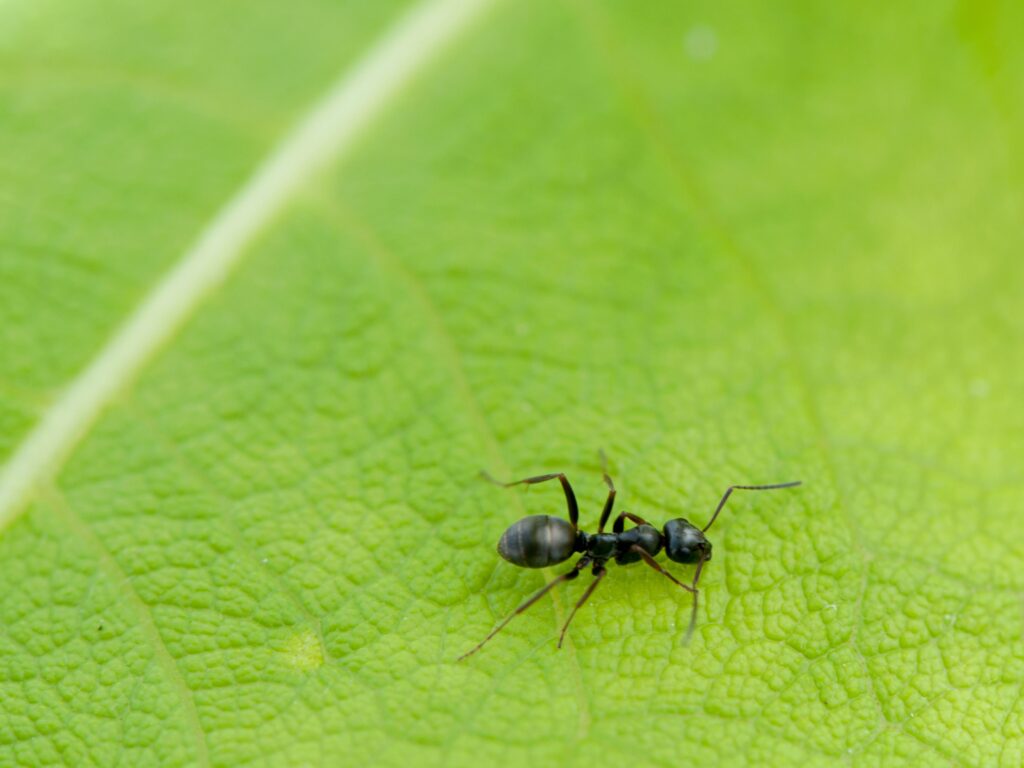
Black ants
Black ants are one of the most common types you’ll see in lawns.
They aren’t aggressive and don’t sting.
But they can build nests that mess up your soil and grass.
Their colonies usually stay near the surface, which makes them easier to deal with.
Use ant bait stations or granules around their trails and nests.
Black ants are attracted to sweet baits, so pick products labeled for sugar-feeding ants.
Avoid drowning their nest with water.
It rarely works and just makes them move.
Stick to bait that targets the colony slowly from within.
Field ants
Field ants look like carpenter ants but behave more like black ants.
They build large dirt mounds in open areas of your lawn, especially in sunny spots.
They don’t sting, but their nests can leave your yard looking rough.
Granular ant bait works well here.
Sprinkle it directly on and around the mound.
Field ants forage for food above ground, so bait is more effective than sprays.
Avoid smashing or disturbing the mound. That only makes them rebuild nearby.
Patience with bait is your best bet.

Carpenter ants
Carpenter ants don’t usually nest in soil like other ants.
They prefer damp, rotting wood, like old tree stumps, logs, or even wooden structures near your lawn.
If you’re seeing them in your yard, there’s likely wet or decaying wood nearby.
First, find and remove their nesting site if possible.
Trim tree branches, clear stumps, or repair rotting wood.
Use a carpenter ant bait labeled for outdoor use around the area.
Skip pouring chemicals into the lawn that won’t touch a wood-based nest.
Focus on cleanup and bait near their trails to control them effectively.

Tip #6 — Protect your lawn from future ant problems
Getting rid of ants is only part of the solution.
Keeping them away for good is what protects your lawn long-term.
Here’s what you can do to kick ants out:
- Water deeply but not often to encourage strong roots. Ants love dry, patchy grass because it’s easier for them to build nests there.
- Mow regularly but avoid cutting too short.
- Fix any drainage problems that leave parts of your lawn dry or bare.
- Don’t leave food scraps, pet food, or sweet drinks outside. Even small crumbs can attract a new wave of ants.
- Regularly disturbing their potential nesting spots, like edging garden beds or raking, can also help stop them from settling in again.
Regular yard care makes your lawn less inviting to ants and easier for you to manage.
Tip #7 — Keep your lawn healthy all year
Ants love weak, patchy lawns. Bare spots give them easy places to build nests.
That’s why good lawn care is part of pest control, too.
Here’s what you can do to keep your lawn healthy each season and less inviting to ants.
And if you need backup, a lawn care service can keep it in shape for you.
Spring
Spring is when your lawn starts waking up after winter.
It’s the best time to fertilize when you see new growth starting on its own.
You’ll also want to overseed any bare spots early to prevent ants from moving in.
And while mowing is important, avoid cutting the grass too short.
Short grass dries out faster and leaves room for pests.
For more detailed steps, you can check out these spring lawn care tips.
Summer
Summer lawn care is all about helping your grass survive the heat.
Water deeply once or twice a week instead of daily.
This encourages deeper roots and stronger grass.
Raise your mowing height slightly to protect it from sun damage.
And always watch for dry, patchy spots. Ants love settling in these areas.
Fall
Taking care of your lawn during fall helps it to recover from summer stress and prepare for winter.
Keep mowing until the grass naturally slows down.
Rake up leaves so ants, bugs, and mold don’t hide underneath.
This season is also the best time to apply fertilizer to build stronger roots for next year.
Winter
Winter lawn care is about protecting what you’ve worked on all year.
Keep your yard clear of debris, branches, and clutter where pests like ants might hide.
Limit walking on frozen grass to avoid damage.
And if your lawn struggled last year, winter is a good time to plan for early spring seeding.
What not to do with your lawn no matter how bad the ants get
Ants in your lawn can push your patience.
But the wrong move can do more damage than the ants themselves.
Here’s what to avoid:
- Don’t mow right after spreading bait or dust. You’ll break it up and ruin the treatment before it has a chance to work.
- Don’t pour vinegar, ammonia, or bleach across your lawn. These might kill some ants, but they’ll also kill your grass and wreck your soil.
- Don’t use bug bombs outside. They’re made for sealed indoor spaces, not open lawns. Total waste of money outdoors.
- Don’t drench your whole yard in pesticides just because it says “kills on contact”. You’re more likely to hurt your grass, pets, or beneficial insects. Treat ant nests directly instead.
Don’t let ants call the shots in your yard
Ants in your lawn are indeed annoying. But getting rid of them doesn’t have to be complicated.
Instead of using the strongest product you can find, you need to use the right method.
Start small with natural options if the problem is new or mild.
Only use the outdoor-safe treatments when the colony grows or keeps coming back.
The most important part is not to stop at killing ants.
Always keep your lawn healthy, clean, and well-maintained so ants don’t see it as an easy home again.
Treat the problem early, be patient with your methods, and stay consistent with lawn care.
That’s how you get a lawn that’s green and ant-free.
But if nothing seems to work or the infestation feels out of control, calling a local pest control service is a smart move.
Professionals have access to stronger treatments and know exactly how to target different ant species without damaging your lawn or putting pets at risk.